Sprouts is a captivating pencil-and-paper game from the 1960s, created by mathematical minds John Conway and Michael Paterson. With just paper, a pencil, and a friend, you can dive into the sprouts rules, which are simple yet lead to surprisingly deep strategy. This game is perfect for quick play or intense battles, making it ideal for anyone curious about how to play sprouts. In this article, we’ll break down the sprouts rules—defined as the guidelines for drawing lines and dots to outlast your opponent—covering legal moves, the notation system, and even quirky terms like white sprouts and crosses in sprouts. Whether you’re a beginner or a seasoned player, you’ll find clear steps, strategic tips, and examples to master the game. Let’s explore why Sprouts is a timeless gem and how you can start playing today!

Basic Rules for Playing Sprouts
Are you wondering why the living dots are called white shoots? The answer is simple! The term “white shoots” is a playful reference to their active, “growing” state, like young shoots in a garden, although this is not an official rule.
The core of Sprouts lies in its elegant simplicity: two players take turns drawing lines between dots and adding new dots, aiming to make the last legal move. The sprouts rules ensure the game is fair, structured, and finite, as each move reduces future possibilities.
Setting Up the Game
To begin, you need minimal supplies and a quick setup. Here’s how to kick off a game of Sprouts:
- Materials: Grab a piece of paper and a pencil. A pen works too, but a pencil allows for erasing mistakes.
- Starting Dots: Draw 2–5 dots on the paper. Three dots are ideal for beginners, balancing simplicity and strategy.
- Turn Order: Decide who goes first with a fair method, like flipping a coin or rock-paper-scissors.
- First Move: The first player draws a line (straight or curved) between two dots or back to the same dot, then places a new dot on that line.
Example: Imagine three dots labeled A, B, and C. Player 1 draws a curved line from A to B and places a new dot, D, on the line. Player 2 then connects B to C, adding dot E. The game continues, with each move following the sprouts rules.
The setup is quick, requiring no special tools, and the sprouts rules ensure every game starts on equal footing. Starting with three dots keeps games short (around 6–8 moves), perfect for learning how to play sprouts.
Ready to play your first game of Sprouts without mistakes? Download this printable Sprouts Rules Checklist PDF — a quick-reference guide with setup steps and legal move checks. Perfect for beginners, family game nights, or printing multiple copies. Keep it handy during play to ensure every move is valid and fair!”

Winning the Game
The objective is to be the last player to make a legal move. Each move—drawing a line and adding a dot—consumes “lives” (connection points) from existing dots while introducing a new dot with two lives. A dot with three lines is “dead” and cannot be used again, and the game ends when no legal moves remain.
Key Facts:
- A dot can have up to three lines (three “lives”).
- Each move uses two lives (one from each connected dot) and adds a new dot with two lives.
- For n starting dots, the game lasts between 2n and 3n–1 moves. For three dots, expect 6–8 moves.
Example: In a three-dot game, Player 1 connects A to B, adding D. If D later gets three lines, it’s dead. If Player 2 traps Player 1 by leaving no valid connections (e.g., all remaining dots have three lines or are blocked by crosses in sprouts), Player 2 wins.
The sprouts rules create a finite game where every move matters. You’re not just drawing lines—you’re planning to trap your opponent.
“The day after sprouts sprouted, it seemed that everyone was playing it, at coffee or tea times, there were little groups of people peering over ridiculous to fantastic sprout positions.” – John Conway
Why Sprouts Is Fun
Sprouts combines creativity with strategy. The act of drawing feels like doodling, but each line is a calculated move to outwit your opponent. It’s accessible—kids can learn how to play sprouts in minutes—yet offers depth for those who want to strategize. Games are quick, making it ideal for casual settings like coffee breaks or road trips.
Example: Two friends on a train start with three dots. They laugh as they draw looping lines to block each other, with one accidentally boxing themselves in after five moves. The game sparks banter and a rematch challenge.
The sprouts rules are easy to grasp, making the game a great mix of fun and brain-teasing strategy. To get started, draw three dots and challenge a friend. You’ll quickly see why Sprouts has charmed players for decades.

What Counts as a Legal Move?
The sprouts rules hinge on a few key restrictions to keep the game structured and fair. A legal move involves drawing a line between two dots (or back to the same dot) and adding a new dot on that line, but there are limits to prevent chaos. This section explains what makes a move valid and common pitfalls to avoid.
The No-Crossing Rule
Lines must not cross each other. This rule prevents the game board from becoming a tangled mess and forces players to plan their moves carefully. Crosses in sprouts—lines intersecting existing lines—are strictly forbidden, though lines can curve to avoid others.
The no-crossing rule is rooted in the game’s topological nature.
“Sprouts is a game that starts simply but grows into fascinating topological complexities.” – Martin Gardner, popularized Sprouts in Scientific American, mathematician and writer.
Example: Player 1 wants to connect dots A and C, but a line from B to D is in the way. Instead of crossing, they draw a curved line around it, placing a new dot, E, on the line. This keeps the move legal and the board clear.
The Three-Line Limit
Each dot can have at most three lines connected to it. Once a dot has three lines, it’s “dead” and cannot be used for further connections. This rule ensures the game ends by limiting the number of possible moves.
In a game with n starting dots, each dot begins with three lives, giving 3n total lives. Each move consumes two lives and adds a new dot with two lives, reducing the total by one per move.
Example: Dot A has two lines. Player 2 connects A to C, adding dot F. Dot A now has three lines and is dead. Player 1 must now use other dots, like F, which has two lives left.
Fun fact: Newbies often ask: “Why can’t I connect to a dot with three lines?” According to the rules of the game “Plants”, a dot with three lines is considered “filled”, which ensures that the game is approaching the end by reducing the available connections.
Looping Moves
A player can draw a line from a dot back to itself, creating a loop, and place a new dot on that loop. This counts as a legal move, provided the line doesn’t cross others and the starting dot has fewer than three lines.
Example: Dot B has one line. Player 1 draws a loop from B to B, adding dot G on the loop. This uses two of B’s lives (leaving it dead) and gives G two lives. It’s a strategic way to limit an opponent’s options.
Looping moves can isolate dots or create barriers, making it harder for your opponent to find legal moves. They’re a key part of mastering how to play sprouts. Advanced players often explore underlying structures to predict outcomes.
Here’s a step-by-step table illustrating a looping move:
| Step | Action | Result |
|---|---|---|
| 1 | Select a dot with fewer than three lines (e.g., Dot B with one line). | Board ready. |
| 2 | Draw a non-crossing loop from B back to B. | Loop created. |
| 3 | Place new dot G on the loop. | Dot B now dead (three lines); G has two lives. |
Common Mistakes to Avoid
To keep your game on track, watch out for these errors that violate the sprouts rules:
- Crossing Lines: Drawing a line that intersects another is invalid. Always curve around existing lines.
- Overusing Dots: Connecting to a dot with three lines breaks the rules. Check each dot’s “lives” before moving.
- Forgetting New Dots: Every line must have a new dot placed on it, or the move is incomplete.
- Skipping Turns: Each player gets one move per turn, no more, no less.
Example: A beginner tries to connect two dead dots, not realizing they each have three lines. Their opponent points out the mistake, and they redraw a valid move, like a loop on a live dot.
Legal moves in Sprouts are defined by clear boundaries—no crossing lines, no overusing dots, and always adding a new dot. These rules keep the game fair and force strategic thinking. Next time you play, double-check your moves to avoid simple errors and keep the board clean.
Legal Move Checklist
Before drawing your line, run through these:
Both starting and ending dots have fewer than 3 lines (lives left)?
The line does not cross any existing line? (curve around if needed)
You are connecting two different dots OR looping from a dot to itself?
You will place a new dot exactly on the new line (not at the ends)?
The move doesn’t create an invalid structure (e.g., no self-intersecting loops without new dot)?
After the move, the new dot starts with exactly 2 lives (two stubs)?
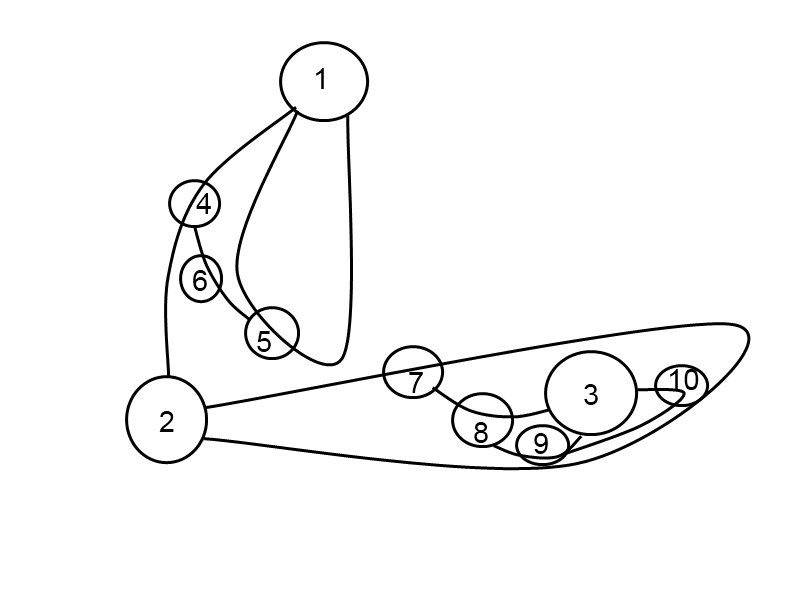
Understanding Notation and Spots
For players who want to dive deeper, the Sprouts game terms and concepts like spots and white sprouts add a new layer to Sprouts. While not needed for casual play, these tools help track moves and analyze strategies, making the game even more intriguing.
What Are Spots and Lives?
In Sprouts, spots are the dots on the paper, each starting with three “lives” (potential lines). When a line connects to a spot, it loses one life. A spot with three lines is “dead,” while those with fewer are “alive” (sometimes called white sprouts for their active status).
For n starting spots, the game has 3n initial lives. Each move consumes two lives and adds a spot with two lives, reducing the total by one. A three-spot game starts with nine lives and ends after 6–8 moves.
Example: Start with three spots (A, B, C). Player 1 connects A to B, adding D. A and B lose one life each (now two lives), and D starts with two lives. If D later gets a third line, it’s dead, reducing options.
The lives system ensures the game ends, as each move brings you closer to a board with no legal moves. Understanding white sprouts helps you track which spots are still in play.
The Notation System
The notation system, often called Conway notation, records moves in a concise format. A move connecting spots X and Y with a new spot Z is written as “X-Y, Z.” A loop from X to itself with new spot Z is “X-X, Z.” This system is perfect for analyzing games or sharing strategies.
Table: Notation Examples
| Move Description | Notation | Explanation |
| Connect A to B, add D | A-B, D | Line from A to B, new spot D on line |
| Loop from C to C, add E | C-C, E | Loop from C, new spot E on loop |
| Connect B to D, add F | B-D, F | Line from B to D, new spot F on line |
Example: In a game with spots A, B, C, Player 1 writes “A-B, D” for their first move. Player 2 responds with “C-C, E,” looping C to itself. This log helps both players track the game’s progress.
Notation turns a doodle-like game into a structured puzzle. It’s especially useful for longer games (4–5 spots) where the board gets complex.
Strategies Using Notation
Recording moves can reveal winning patterns. For example, looping moves (e.g., “A-A, E”) can isolate spots, while connecting distant spots (e.g., “B-D, F”) might open new paths. Reviewing a game’s notation helps identify mistakes, like missing a chance to trap an opponent.
Example: After a game, you review your notation: “A-B, D; C-D, E; B-E, F.” You notice that “C-D, E” left a spot open for your opponent to win. Next time, you try a loop to block them earlier.
The notation system and concepts like spots and white sprouts add depth to Sprouts, letting you track and analyze games. While not essential for casual play, they’re great for enthusiasts. Try notating your next game to spot new strategies and share your best plays.

Strategies to Win at Sprouts
Winning at Sprouts requires more than knowing how to play sprouts—it demands clever planning. The sprouts rules set a clear framework, but outsmarting your opponent involves controlling the board and anticipating their moves. Here are practical strategies to give you an edge.
Controlling the Board
The key to winning is limiting your opponent’s options while keeping your own moves open. Each line you draw reshapes the board, so aim to create barriers or isolate white sprouts.
Use loops (e.g., “A-A, E”) to burn a dot’s lives quickly or to block access to other spots. Connecting two dots with one life each makes them both dead, shrinking the board.
Example: In a three-spot game, Player 1 loops A to A, adding D. This leaves A dead and D with two lives, potentially trapping B and C in a smaller area. Player 2 struggles to find a legal move later.
Mathematical analysis shows that in a three-spot game, the first player can often force a win by controlling key spots early, especially with loops or long curves.
So how do you know when to use the loop? Use a loop when you want to use up a dot’s lives or isolate a section of the board, especially if your opponent has limited options.
Understanding Game Length and Survivors
The number of starting spots affects game length and strategy. Odd-numbered starting spots (e.g., 3) often favor the first player, while even numbers (e.g., 4) give the second player an edge. Survivors (spots with fewer than three lines) determine the endgame, as the game stops when no legal moves remain.
A game with n spots lasts n–1 to 2n–1 moves. For three spots, that’s 6–8 moves; for four, it’s 7–9 moves.
Example: In a four-spot game, Player 2 wins by making the last move after eight turns, leaving a survivor with one life that can’t connect without crossing lines. To estimate survivors, remember: at the end, survivors have one life left. In a maximal game, aim to minimize them to force your opponent into a trap.
A study by Applegate (1991) analyzed hundreds of Sprouts games and found that matches with n starting dots typically last between 2n and 3n–1 moves, depending on player strategy. This supports mathematical predictions and helps players estimate game length more accurately.
Practice and Analysis
The best way to improve is to play repeatedly and review your games. Start with three spots for quick practice, then try four or five for complexity. Using the notation system to log moves helps you spot patterns or mistakes.
Example: After losing a three-spot game, you review your notation and see you connected two live spots too early, giving your opponent an easy path. In the next game, you try a loop to block them, winning in seven moves.
Winning at Sprouts comes down to controlling the board, understanding game length, and practicing with notation. Experiment with loops and long lines to trap your opponent, and review your games to refine your skills. Grab a friend and test these strategies in your next match.
Brussels Sprouts: A Fun Twist
For a fresh take on Sprouts, try Brussels Sprouts, a variant that swaps dots for crosses. While it shares the sprouts rules spirit, it introduces crosses in sprouts and a fixed game length, making it less strategic but equally fun.
How Brussels Sprouts Works
Start with 2–3 crosses, each with four “arms” (line ends). A move connects two free arms with a line, then adds a short crossbar to create a new cross with four arms. The game lasts exactly 5n–2 moves, where n is the number of starting crosses.
Example: With two crosses, the game lasts 8 moves (5 × 2 – 2). Player 1 connects two arms, adds a new cross, and play continues until no free arms remain.
Unlike Sprouts, Brussels Sprouts has a predetermined length, making it more predictable but less about outsmarting your opponent.
Why Try Brussels Sprouts?
This variant is visually distinct, with crosses in sprouts creating a unique board. It’s great for players who enjoy Sprouts’ drawing aspect but want a change of pace. The fixed length makes it ideal for quick, casual games.
Example: Kids at a party try Brussels Sprouts with two crosses. They enjoy drawing the crosses and finish in exactly eight moves, laughing at the quirky shapes.
Conclusion: Brussels Sprouts offers a fun, predictable twist on the sprouts rules. It’s less strategic but perfect for casual play or introducing new players to the game’s vibe. Try it after a few Sprouts games to mix things up.

FAQ: Common Questions About Sprouts
- How do I start a game of Sprouts?
Draw 2–5 dots on paper, decide who goes first, and take turns drawing a line between two dots (or looping to the same dot) while adding a new dot on the line. Follow the sprouts rules: no crossing lines, max three lines per dot. - Why can’t lines cross in Sprouts?
The no-crossing rule keeps the game board planar and ensures strategic clarity. Crossing lines would make the board chaotic and break the sprouts rules. - What’s better: Sprouts or Brussels Sprouts?
Sprouts offers more strategic depth, ideal for competitive players. Brussels Sprouts is more predictable and visual, great for casual fun. Try both to see which suits your mood! - How does the notation system work?
Record moves as “X-Y, Z,” where X and Y are connected spots, and Z is the new spot on the line. For a loop, write “X-X, Z.” It’s a tool for tracking and analyzing games. - Why are some spots called white sprouts?
White sprouts is an informal term for spots with fewer than three lines, still “alive” for moves. It’s a playful way to describe active dots, not an official rule.
If you have any questions left, you can watch the video. The host explains the rules of the game and demonstrates how to play it.
Sprouts is a delightful blend of simplicity and strategy, with sprouts rules that are easy to learn yet open the door to clever plays. From drawing lines and avoiding crosses in sprouts to mastering the notation system and tracking white sprouts, the game offers endless fun for casual and serious players alike. Whether you’re looping dots to trap your opponent or trying the quirky Brussels Sprouts variant, there’s always a new challenge to explore. Grab a pencil, draw a few dots, and challenge a friend to a game. Share your best moves using the notation system and see who can claim victory!
Sources
- Research: (1991, Bell Labs). Computer Analysis of Sprouts
- Quote: Conway, J. (1967, as cited in NRICH Maths). Sprouts Explained
- Quote: Gardner, M. (1967, Scientific American). Mathematical Games
- Metrics on moves: (2023, Wikipedia). Sprouts (game)