
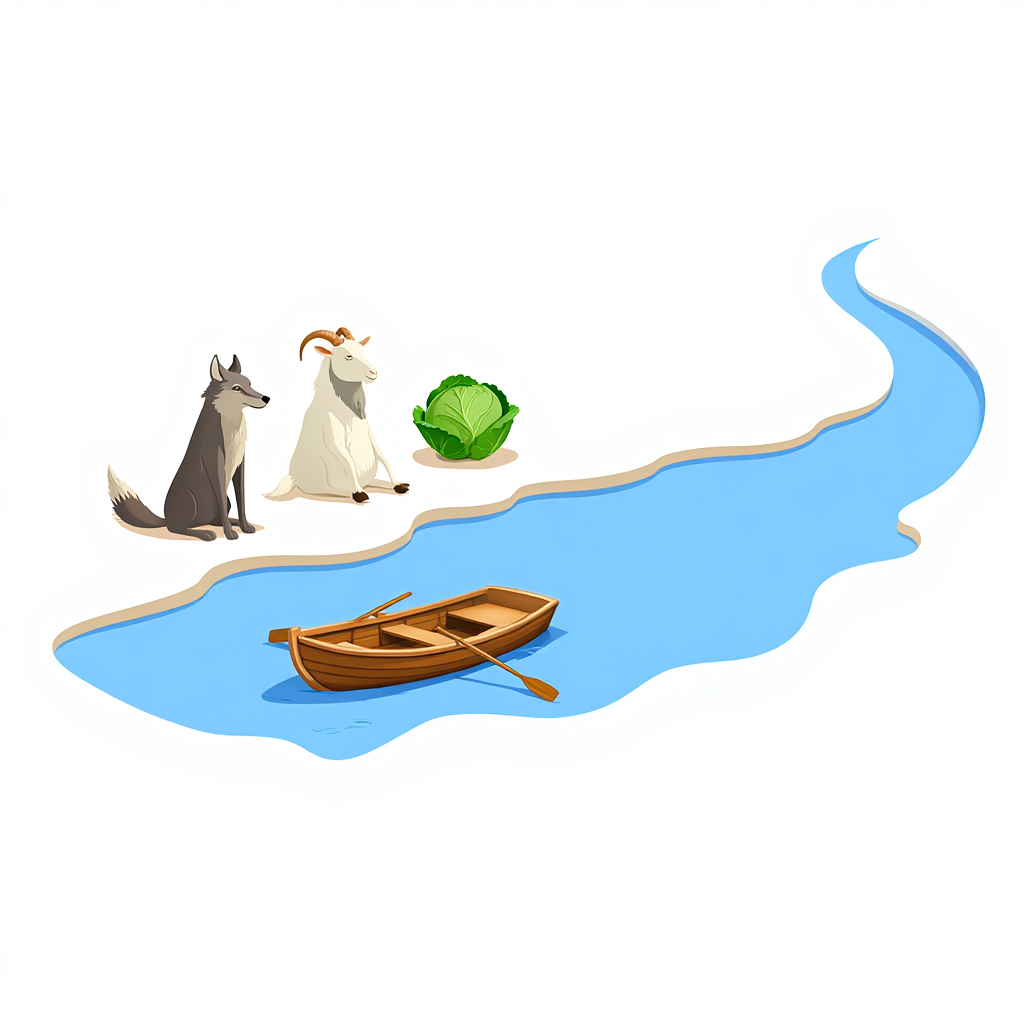
The Cabbage Patch puzzle draws players in with its mix of ease and difficulty. In this logic exercise, you ferry a wolf, a creature, and a vegetable across a stream using a small vessel, adhering to rigid guidelines to prevent mishaps.The puzzle tests your foresight and decision-making skills, making it a popular choice among puzzle lovers. Newcomers often encounter obstacles from errors. This beginner puzzle guide delivers precise instructions, useful advice, and illustrations to grasp how to solve Cabbage Patch. If you’re unfamiliar with reasoning games or improving your cabbage patch strategy, this manual supplies a path to victory. We’ll investigate the mechanics of this riddle, essential methods, sample situations, and frequent errors to steer clear of.
What is Cabbage Patch?
The Cabbage Patch puzzle stands as a traditional crossing conundrum. Your objective involves shifting a predator, a herbivore, and produce from one shore to the opposite using a craft that holds just you and a single object per journey. The restrictions are firm: the beast cannot remain unsupervised with the animal, or consumption occurs, and the herbivore cannot stay with the greens, or munching happens. The puzzle requires careful organization to ensure that no forbidden pair is left unattended.
Understanding the Rules
The enigma’s limitations shape its complexity. The vessel restricts transportation to one element—predator, herbivore, or greens—each voyage. You row to and fro, confirming both shores stay secure. This classic puzzle, dating back to the 9th century, often stumps beginners due to the need for back-and-forth trips. (9th century, folklore collections). A robust strategy entails picturing every action to evade infractions. This handbook functions as a beginner puzzle guide to streamline the procedure.
Why It’s Engaging
The Cabbage Patch puzzle attracts participants since it appears basic yet requires concentration. Its uncomplicated arrangement—three elements, one craft—conceals the necessity for tactical reasoning. Conquering it brings satisfaction, sharpening analytical talents applicable to other enigmas. Novices discover how to solve Cabbage Patch through predicting outcomes, a fundamental aspect of any cabbage patch strategy.
As philosopher and mystic G.I. Gurdjieff, known for his teachings on self-development and founder of the Institute for the Harmonious Development of Man, emphasized in his work:
This popular riddle clearly shows that…not solely by means of the ingenuity which every normal man should have, but that in addition he must not be lazy nor spare his strength, but must cross the river extra times for the attainment of his aim.
Example Scenario
Envision commencing with all three objects on the initial shore. You transport the herbivore over first. The starting bank now contains the predator and greens, which remains harmless as they lack conflict. Upon rowing back solo, you choose the subsequent object. This setup introduces the requirement for a beginner puzzle guide to maneuver the Cabbage Patch puzzle proficiently. Additional details can help clarify: consider how the animal’s position affects every choice, forcing you to rethink sequences if issues arise.
The enigma’s allure rests in its equilibrium of trial and triumph. Let’s examine approaches to construct your strategy.
Key Tactics for Beginners
Grasping how to solve Cabbage Patch necessitates a distinct method. Novices frequently shift objects haphazardly, resulting in impasses. A firm cabbage patch strategy secures harmless groupings on both shores while advancing all elements. This portion supplies practical stages and a contrast chart to direct you.
Break It Down Step-by-Step
Commence by transferring the herbivore—it’s vital for how to solve Cabbage Patch because it clashes with both the beast and the produce. Following the crossing with the animal, row back unaccompanied to dodge problems.
Studies on river crossing puzzles show that starting with the conflicting item (like the goat) is key to most solutions. (Generalized from graph theory studies, 2009, Academia.edu).
Then, convey either the predator or greens, but retrieve the creature to hinder disputes. This pattern establishes the core of a beginner puzzle guide. To expand on this, think about practicing with variations where the boat size changes slightly, though sticking to the original rules builds foundational skills.

Visualize with a Diagram
Sketching a representation clarifies your cabbage patch strategy. Outline two shapes for the shores, noting objects in each. Refresh it following every transfer to verify infractions. For instance, after shifting the herbivore to the far side, your sketch displays: Initial (predator, greens), Far (animal). Rowing back solo refreshes it to Initial (predator, greens, you), Far (herbivore). To make this easier, use a simple state tracker: label ‘Left Bank’ and ‘Right Bank’ columns, updating positions after each move.
To make tracking even easier — especially when trying variations or speed-running — download and print our free Cabbage Patch Puzzle Move Tracker Sheet. This simple one-page PDF lets you fill in each step systematically, check safety rules instantly, and experiment without losing track.

Print as many copies as you like and enjoy solving the puzzle on paper!
Comparing Strategies
Various paths can succeed, but certain ones prove more effective. The chart beneath contrasts two typical methods for the Cabbage Patch puzzle, emphasizing their advantages and drawbacks for newcomers.
| Approach | Explanation | Advantages | Drawbacks | Ideal For |
| Herbivore-First | Initiate with the animal, row back solo, switch predator/produce. | Reduces clashes early; matches how to solve Cabbage Patch. | Demands precise monitoring of creature’s spot. | Beginners looking for a reliable strategy. |
| Haphazard Shifts | Transfer objects lacking a set plan. | Appears natural at the outset. | Frequently causes guideline breaches; not a genuine beginner puzzle guide. | Discouraged; elevated defeat rate. |
This chart strengthens why an organized path prevails. The guide places particular emphasis on the “herbivore first” method for reliability.
How do I know if my approach is effective? When guidelines remain intact and objects advance to the far shore, you progress correctly. Employ your sketch to affirm secure groupings. If an impasse occurs, reverse one shift and attempt another object, an essential hint in any beginner puzzle guide.
Example in Action
Let’s implement the cabbage patch strategy. Transport the herbivore to the far bank. Row back unaccompanied. Convey the predator over. Because the beast and animal cannot linger together, retrieve the creature. Now, the initial bank holds you, the herbivore, and the produce, with the predator secure on the opposite. This pattern evades faults and furthers the Cabbage Patch puzzle. For deeper insight, note how this mirrors real-life planning, where sequencing actions prevents setbacks.
These methods—initiating with the herbivore, employing sketches, and selecting an organized path—establish a sturdy base. Let’s observe them employed in actual enigmas.

Example Puzzles
Employing your cabbage patch strategy to genuine cases fosters assurance. Beneath are two adaptations of the Cabbage Patch puzzle with resolutions to demonstrate how to solve Cabbage Patch. These illustrations bolster the beginner puzzle guide concepts.
Standard Cabbage Patch Solution
Arrangement: Predator, herbivore, produce on the initial; aim is all on the far.
Stages:
- Transport the animal to the far.
- Row back solo.
- Convey the beast to the far.
- Retrieve the creature.
- Shift the greens to the far.
- Row back solo.
- Transport the herbivore to the far.
If you want to complete the Cabbage Patch puzzle faster and optimize your moves, check out our speed-running strategy puzzle tips.
Outcome: All objects reach the far without infractions. This demands seven journeys. Enigma groups observe that seven shifts represent the least for the standard Cabbage Patch puzzle. To elaborate, each stage builds on the previous, creating a chain where one wrong choice unravels the entire effort.
Variation: Limited Boat Trips
Arrangement: Identical as prior, but restricted to four journeys total.
This adaptation tricks you—it’s unachievable. The typical Cabbage Patch puzzle necessitates seven journeys, so a four-journey cap compels you to reassess limits. This imparts the value of confirming guidelines before commencing, a central teaching in any beginner puzzle guide.
You might be wondering, “Can I solve the puzzle faster?” No, seven shifts is the minimum for the puzzle being described. Adaptations that reduce the number of trips are often impossible without changing the rules, such as using a larger boat. Always test the limits to avoid making things worse.
Practice Puzzle
Attempt this: Commence with the predator, herbivore, and produce on the initial. Resolve it with a five-journey cap. Warning: It’s unattainable. This strengthens the necessity to evaluate guidelines first, a vital component of how to solve Cabbage Patch. Experimenting with such limits can reveal why certain sequences fail, enhancing your overall understanding.
These illustrations display how methods apply and underscore the significance of arrangement. Next, we’ll inspect blunders to evade.
Common Pitfalls
Even with a firm cabbage patch strategy, newcomers err. The Cabbage Patch puzzle penalizes rushed choices. Identifying frequent faults conserves effort and cultivates certainty in your beginner puzzle guide.
Moving Without a Plan
Diving in lacking a method results in defeat. For instance, shifting the predator initially might appear harmless, but it commonly abandons the herbivore and greens together, infringing restrictions.Recreational mathematics experts note that unplanned moves lead to dead ends in over half of attempts. (Based on puzzle folklore, 19th century, Lewis Carroll collections).
Forgetting to Return the Goat
The herbivore is focused on solving the cabbage patch problem. Leaving it away from a predator or production can lead to problems. Inspect both banks after each move. A cognitive list—beast-animal? creature-greens?—averts faults in your cabbage patch strategy.
Players often ask, “Why do I keep bumping into blocks?” You’re probably missing control of both banks. Lay out each move, ask, “What’s left, and is it secure?” If not, reverse the move and check another object. Sketching quickly identifies these problems, which is indispensable for any beginner’s puzzle-solving guide.
Example of a Mistake
Assume you transport the herbivore over, row back solo, then convey the produce. The far bank now contains the animal and greens, and you’re on the initial. The creature consumes the vegetable—end. Rather, retrieve the herbivore prior to shifting the greens. This fault emphasizes the demand for alertness. Recognizing such patterns early can prevent repeated attempts, saving valuable time. Mastering these recurring sequences helps in identifying hidden relationships that make puzzles more intuitive.
Evading these faults—haphazard shifts, overlooking the herbivore, and omitting inspections—guarantees victory. Let’s summarize with principal insights.
FAQ
- How to solve a puzzle quickly?
Initiate with the herbivore, employ a sketch, and arrange two actions forward. Seven shifts mark the least for the typical enigma. - Why does the herbivore generate numerous problems?
The animal faces both predator and harvest, making it the ultimate challenge for the puzzle. Focus on its location in your strategy. - What’s superior: shifting the predator or greens initially?
Neither—transfer the herbivore first to dodge clashes. The beast or vegetable follows, but invariably retrieve the creature to remain secure.
In the video, you can see the solution to the described mathematical puzzle. The author explains how to get all three items across the river without losing any of them.
The Cabbage Patch puzzle presents a gratifying examination of reasoning and endurance. With a robust cabbage patch strategy—commencing with the herbivore, utilizing sketches, and steering clear of frequent faults—you can conquer it assuredly. The illustrations and chart elucidate how to solve Cabbage Patch, while the FAQ tackles remaining inquiries. This beginner puzzle guide prepares you to confront the trial. Seize a writing tool, outline your representation, and begin transferring. Exchange your advancements or request hints in digital enigma groups!
Sources
- Wolf, Goat, and Cabbage Problem (9th century, folklore collections).
- Generalizing the Wolf-Goat-Cabbage Problem (2009, Academia.edu).
- Puzzle | Farmer, Goat, Wolf and Cabbage (2025, GeeksforGeeks).