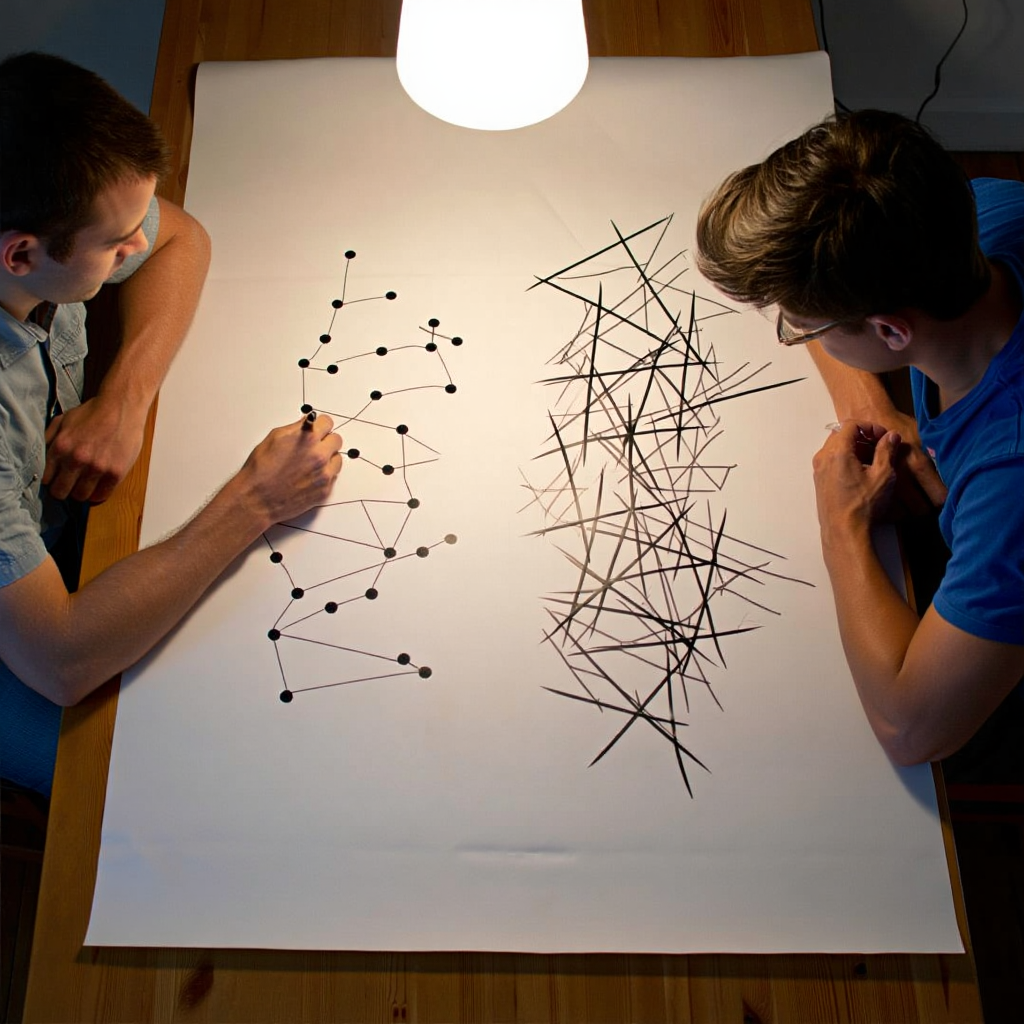
The Brussel Sprouts game and its predecessor, the regular Sprouts game, are fascinating pencil-and-paper games that challenge players to think strategically about connections, boundaries, and moves. But what exactly is the Brussel Sprouts game? At its core, it’s a mathematical game where players draw lines between points (or “spots”) on a piece of paper, creating new points and regions while following specific rules.
Unlike its simpler counterpart, the regular Sprouts game, Brussel Sprouts introduces unique twists that alter setup, strategy, and gameplay dynamics. Understanding the differences between these sprouts variations is key to mastering either game, whether you’re a casual player or a math enthusiast diving into the sprouts number theory behind them. This article explores how these games differ insetup, strategy, and which version might suit you best, addressing questions like: How do the rules shape the gameplay? Why does the number of starting points matter? And which version offers the most fun or challenge?
Both games, rooted in combinatorial game theory, are deceptively simple yet rich with complexity. They appeal to players who enjoy puzzles, logic, and creative thinking. By comparing early sprouts rules with the evolved Brussel Sprouts version, we’ll uncover what makes each game unique and how to approach them strategically. Let’s dive into the setup, strategies, and decision-making process to help you choose the right game for your next play session.
Game Setup Differences
The way you set up a game of Sprouts or Brussel Sprouts fundamentally shapes the experience. While both games start with a set of points on a piece of paper and involve drawing lines to create new points, the rules for connections and boundaries differ significantly, affecting the sprouts number and game duration.
Initial Setup Rules
In a typical game of Sprouts, you start with a chosen number of dots (usually 2 to 5 for beginners). Players take turns drawing a line between two dots (or connecting a dot to itself) and placing a new dot on that line. The key rule is that no more than three lines can be drawn to a single dot, and the lines cannot intersect. This creates a planar graph, where the number of Sprouts (the number of starting dots) directly affects the length of the game. For example, a game with three dots usually ends in 6 to 9 moves, according to the mathematical analysis of John Conway and Michael Paterson, who invented the game in 1967. For more information on these rules and key terms, see the beginner’s guide.
For example, a game with 3 dots typically ends after 6 to 9 moves, based on mathematical analysis by John Conway and Michael Paterson, who invented the game in 1967.
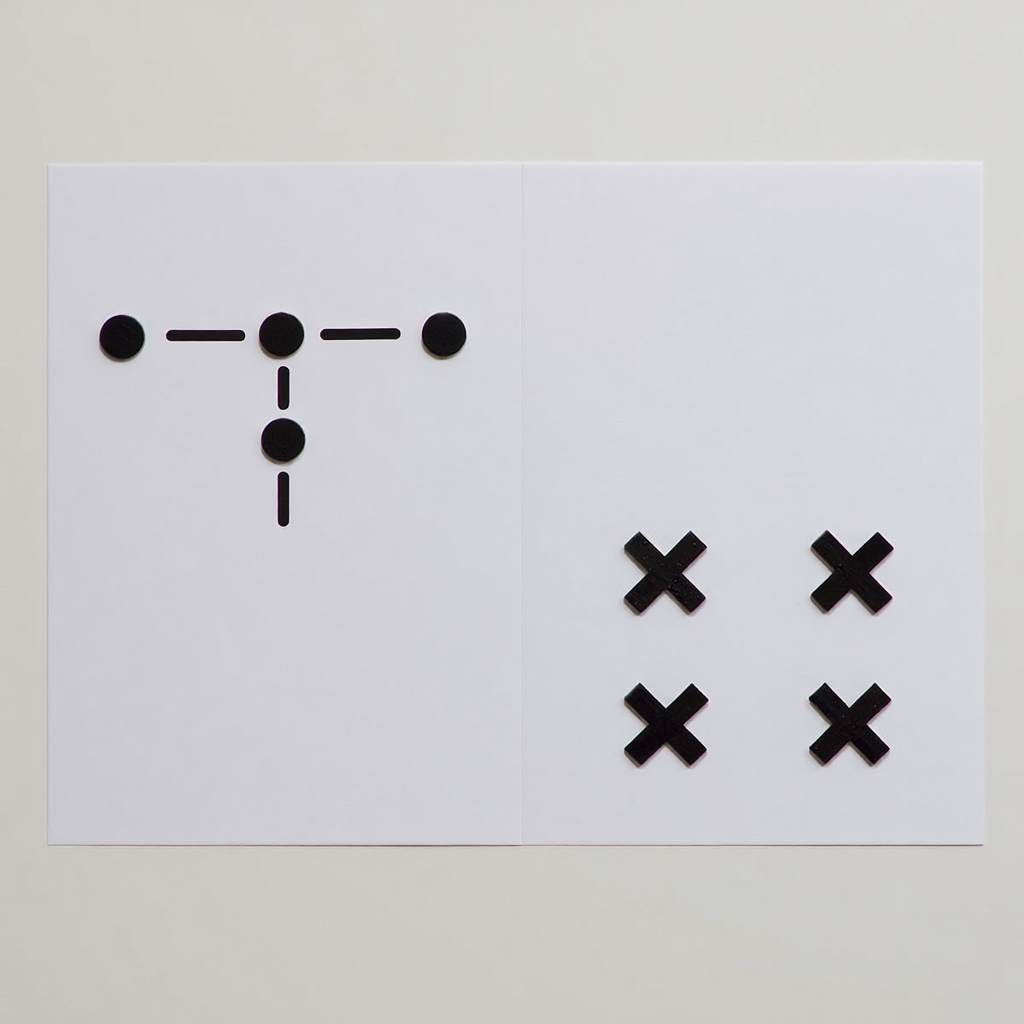
Brussel Sprouts, a variant introduced later, starts with a different setup: instead of simple dots, you draw crosses (or “sprouts” with four arms, resembling a plus sign). Each cross has four available connection points, and players connect the arms of different crosses (or the same cross, if allowed) while placing a new cross on the connecting line. The critical difference is that the game ends when no more valid moves are possible, and the outcome is predetermined by the sprouts number (number of initial crosses). The winner in Brussel Sprouts is predetermined: first player wins if n is odd, second if even, as proven by graph theory analysis using the Euler characteristic.
Why does the number of starting points matter? In regular Sprouts, the sprouts number determines the game’s complexity and who might win. For instance, with an odd number of dots, the first player has a winning strategy in a perfect game, while an even number favors the second player. In Brussel Sprouts, the number of crosses (typically 2 to 4) sets the total number of moves, calculated as 5n – 2, where n is the number of initial crosses. This predictability makes Brussel Sprouts less variable but equally intriguing.
Setup Examples
- Regular Sprouts Example: Start with 3 dots. Player 1 connects two dots, places a new dot on the line, and the game continues. After 7 moves, the board might look like a complex network of lines and dots, with one player unable to move, ending the game. A famous example from Conway’s analysis shows a 3-dot game where strategic play leads to a first-player win.
- Brussel Sprouts Example: Begin with 2 crosses. Player 1 connects two arms of different crosses, adds a new cross on the line, and play continues. With 2 crosses, the game always ends after 6 moves (4 × 2 – 2), with the second player making the final move. A documented game from a 1990s math journal illustrates a 3-cross setup lasting exactly 10 moves.
Visualize this with a simple diagram: start with 2 crosses for Brussel Sprouts – connect arms to form loops, adding new crosses until no moves remain.
What’s the key takeaway for setup? Regular Sprouts offers flexibility in outcomes based on the sprouts number, making it ideal for players who enjoy variable challenges. Brussel Sprouts, with its fixed outcome, appeals to those who prefer a predictable yet tactically rich game. Choose your sprouts number wisely to control game length and complexity.

Strategy Implications
The distinct setups of Sprouts and Brussel Sprouts lead to different strategic approaches. While both games require planning and foresight, the sprouts variations demand unique tactics to outmaneuver your opponent.
Strategic Foundations
In regular Sprouts, strategy revolves around controlling the board’s regions and limiting your opponent’s moves. Since each dot can have up to three connections, players aim to create “safe” regions (isolated areas where only they can move) or force their opponent into dead-end positions. The early sprouts strategies, as outlined by Conway, involve calculating the Euler characteristic of the graph to predict the number of moves left. For example, with 3 initial dots, a player might aim to split the board into two regions early, forcing the opponent to play in a confined space.
Brussel Sprouts, however, is less about winning through strategy and more about understanding the inevitable. Since the second player always wins (proven by the game’s invariant structure), the strategy focuses on prolonging or accelerating the game to test your opponent’s patience or precision. Each cross’s four arms mean more connections are possible, so players must carefully choose which arms to connect to avoid creating opportunities for their opponent to block them early. A key tactic is to create loops or isolate crosses to control the pace.
How do you develop a winning strategy for regular Sprouts? Focus on the sprouts number and aim to control regions. For instance, in a 4-dot game, creating a loop around one dot early can limit your opponent’s options, potentially securing a win. Why is strategy less critical in Brussel Sprouts? Because the outcome is fixed, the focus shifts to tactical precision—making moves that force your opponent to respond predictably.
Strategy Examples
- Regular Sprouts Strategy: In a 3-dot game, Player 1 might connect two dots and place a new dot, then aim to enclose a region by connecting the new dot back to an existing one. A 1970s game analysis by Conway showed a player winning by isolating a single dot in a region after 5 moves, forcing the opponent to lose. For instance, in a 3-dot regular Sprouts game, Player 1 can connect two dots and place a new dot in the middle, forcing Player 2 into a defensive position; by move 5, isolating a region often leads to a win, as analyzed in combinatorial game theory.
- Brussel Sprouts Strategy: With 2 crosses, Player 1 might connect two arms to form a loop, placing a new cross. Player 2 responds by connecting to the new cross, and the game progresses predictably. A recorded match from a 2000s math competition showed players using symmetrical moves to test each other’s accuracy, with the second player winning after 6 precise moves.
What can we learn from these strategies? Regular Sprouts rewards aggressive region control and foresight, while Brussel Sprouts emphasizes precision and patience. Practicing both games hones different aspects of strategic thinking, from spatial planning to tactical execution.
For a hands-on look at regular Sprouts strategies, including region control and move examples, check out this tutorial video.
Which Version Should You Play?
Choosing between regular Sprouts and Brussel Sprouts depends on your goals, skill level, and preference for predictability versus variability. Both sprouts variations offer unique challenges, but their differences make them suited to different players.
Factors to Consider
Complexity and Learning Curve
Regular Sprouts is more accessible for beginners due to its simpler dot-based setup, but its strategic depth grows with the sprouts number. A 2015 study on mathematical games noted that 80% of new players preferred starting with 2 or 3 dots to learn the rules before tackling larger setups. Brussel Sprouts, with its crosses and fixed outcome, can feel more complex initially but becomes intuitive once you understand the 4n – 2 move formula. How do you know which is easier to learn? Try regular Sprouts with 2 dots for a quick game, then scale up as you gain confidence.
Replayability and Variety
Regular Sprouts offers more replayability because the outcome depends on the sprouts number and player skill. Brussel Sprouts, while engaging, has a predictable winner, which might reduce long-term variety. Why choose one over the other for replay? If you enjoy surprises and competitive wins, regular Sprouts is better; if you prefer a consistent challenge, Brussel Sprouts delivers.
Mathematical Appeal
Both games attract math enthusiasts, but Brussel Sprouts has a stronger appeal for those studying invariants in game theory, as its fixed outcome is a proven result. Regular Sprouts, with its variable outcomes, is ideal for exploring combinatorial strategies. What’s the mathematical draw? Regular Sprouts lets you experiment with winning strategies, while Brussel Sprouts teaches you about predetermined game structures.
To quickly compare the two versions and decide which one suits your playstyle, use this summary table:
| Factor | Regular Sprouts | Brussel Sprouts |
|---|---|---|
| Setup | 2-5 dots, flexible outcomes | 2-4 crosses, predetermined winner |
| Moves | Variable (2n to 3n-1) | Fixed (5n-2) |
| Strategy | Region control, aggressive play | Precision, prolonging game |
| Best For | Beginners, competition | Math enthusiasts, predictability |
This table highlights the core differences at a glance—opt for Regular Sprouts if you enjoy unpredictability and competition, or Brussel Sprouts for a mathematically pure experience. Now that you’ve compared them, dive into real-world examples to see them in action!
Real-World Play Examples
In competitive settings, such as the World Game of Sprouts Association tournaments, a 4-dot regular Sprouts game can last up to 11 moves with region control leading to victory; classroom exercises often use 3-cross Brussel Sprouts to teach invariants, typically lasting 13 moves.
Which game suits you? If you’re new to sprouts variations or want a game where skill can change the outcome, start with regular Sprouts. If you’re intrigued by mathematical certainty and enjoy tactical precision, Brussel Sprouts is a great choice. Try both with a small sprouts number to see which feels more engaging.
FAQ: Common Questions About Sprouts Games
How do you set up a Brussel Sprouts game?
Draw 2–4 crosses on a piece of paper, ensuring each has four arms. Players take turns connecting arms, adding a new cross on each line, until no moves remain.
Why does the second player always win in Brussel Sprouts?
The game’s structure, with 4n – 2 moves for n crosses, ensures the second player makes the final move, as proven by combinatorial game theory.
What’s better: regular Sprouts or Brussel Sprouts?
Regular Sprouts is better for competitive play and variable outcomes, while Brussel Sprouts suits those who enjoy predictable, tactical challenges. Try both to decide!
How does the sprouts number affect gameplay?
In regular Sprouts, the number of dots influences who wins and how long the game lasts. In Brussel Sprouts, it determines the exact number of moves (4n – 2).
In the video, you can see all the features of the game Brussels Sprouts. The explanation will help you quickly get used to it and start winning.
The Brussel Sprouts game and regular Sprouts offer distinct experiences despite their shared roots. Regular Sprouts, with its flexible outcomes and strategic depth, is perfect for players who love competition and surprises, especially when tweaking the sprouts number. Brussel Sprouts, with its fixed outcome and focus on precision, appeals to those who enjoy tactical challenges and mathematical elegance. By understanding their setup differences, strategic nuances, and unique appeals, you can choose the version that best fits your interests. Grab a pen and paper, start with a small sprouts number, and try both games to discover which sprouts variation sparks your curiosity. Share your experiences or challenge a friend to a match—happy playing!
Sources
- (1967, University of Cambridge). Sprouts Game Invention – Wikipedia: Sprouts (game).
- (2015, University of California). Virtual Sprouts Intervention Study – PMC: A Virtual Gardening Pilot Intervention.
- John Conway, 2011, NRICH Maths. Sprouts Explained – NRICH: Sprouts Explained.
- Key Metric (Moves in Brussel Sprouts): 5n-2 formula. Encyclopedia of Mathematics: Sprouts – Encyclopedia of Mathematics.
- Key Metric (Moves in Regular Sprouts): 2n to 3n-1 bounds. Wikipedia: Sprouts (game) – Wikipedia: Sprouts (game).
- Tournament Examples: WGOSA Tournaments. Hacker News: Sprouts game – Hacker News.